Where to Find Sustainable Eyewear Manufacturers Using Eco‑Friendly Materials
Meta Title: Where to Find Sustainable Eyewear Manufacturers Using Eco-Friendly Materials | Brilliant Vision
Meta Description: Discover how to find sustainable eyewear manufacturers using eco-friendly materials, and how Brilliant Vision supports brands with high‑quality, responsible production.
Meta Keywords: sustainable eyewear manufacturers, eco friendly eyewear, recycled acetate glasses, brilliant vision, eyewear factory, green optical manufacturing
Sustainability is no longer a niche trend in the eyewear industry; it is fast becoming an expectation from brands and end consumers alike. If you are building or scaling an eyewear brand, finding sustainable eyewear manufacturers that truly understand eco‑friendly materials and responsible production is critical. Using Brilliant Vision as a reference point, this guide explains where and how to find sustainable partners—and what to look for when evaluating them.
1. Understand What “Sustainable Eyewear” Really Means
Before you start searching, it helps to clarify what sustainability means in the context of eyewear manufacturing. A responsible manufacturer typically focuses on three pillars:
- Materials: Bio‑based or recycled acetates, stainless steel and titanium from responsible sources, low‑impact coatings, and packaging made from recycled paper or cardboard.
- Processes: Efficient use of raw materials, reduced waste, water and energy management, and careful control of chemicals and finishes.
- People & Compliance: Fair working conditions, transparent supply chains, and compliance with international standards for safety and quality.
Manufacturers like Brilliant Vision highlight these aspects through their certifications, long‑term client relationships, and the way they present their factory capabilities and services.
2. Start With Specialized Eyewear Manufacturing Platforms
When searching for sustainable eyewear manufacturers, begin with platforms, directories, and trade environments that are specific to the optical industry. These channels help you identify manufacturers that are already experienced with international eyewear brands:
- Optical trade fairs: Events such as MIDO, SILMO, and Vision Expo often feature manufacturers with dedicated sustainability initiatives. Look for exhibitors that showcase eco materials and highlight responsible manufacturing on their booths and catalogs.
- Industry directories: Many trade fairs and optical associations publish online exhibitor lists or directories where you can filter by product type or region and then investigate which companies have eco‑friendly product lines.
- Focused B2B platforms: Beyond generic sourcing sites, narrow your search using terms like “sustainable eyewear factory”, “eco friendly acetate frames supplier”, or “recycled eyewear manufacturer”. Then review each company’s official website to verify their claims.
Use these channels as an initial filter, then move on to deeper due diligence on each manufacturer’s capabilities and sustainability practices.
3. Use the Manufacturer’s Website as a Due Diligence Tool
A manufacturer’s site is more than a digital brochure—it is a key part of your vetting process. When you review a site like Brilliant Vision, look for specific signals that show they can support sustainable eyewear production:
3.1. Evidence of Optical Expertise
Sustainability without technical competence will not help your brand. Check for:
- Years of experience in optical, sunglasses, reading glasses and more.
- Proof that they understand international standards and brand expectations (for example, long‑term cooperation with global brands or retailers).
- Detailed descriptions of production processes: design, prototyping, tooling, injection, polishing, assembly, quality inspection, and packaging.
3.2. Flexible, Brand‑Friendly Services
A good sustainable manufacturer is not just a factory; it is a partner that can adapt to different brand sizes and needs. Look for services similar to what Brilliant Vision highlights:
- OEM & ODM support: Ability to develop custom collections from your sketches or concepts, and to offer in‑house designs you can adapt.
- Small‑batch capabilities: This allows brands to test eco‑friendly collections without over‑producing, which is an essential part of a responsible strategy.
- End‑to‑end solutions: From design and sampling to mass production and final packaging, ideally with sustainable material options at each stage.
3.3. Transparency About Materials and Processes
Even if a manufacturer does not label every product as “eco”, transparency is a strong indicator. Check whether they:
- Explain the types of frame materials they use (acetate, stainless steel, titanium, TR90, etc.).
- Mention material sourcing, recyclability, or options for bio‑based and recycled materials.
- Show images or videos of their production lines, quality inspection, and packaging operations.
Brilliant Vision, for example, emphasizes precision manufacturing, quality inspections, and project‑by‑project customization—which are all essential foundations if you want to integrate eco‑friendly materials without sacrificing performance.
4. Ask Targeted Questions About Eco‑Friendly Materials
Once you have a shortlist of potential partners, the most effective way to confirm sustainability capabilities is to ask concrete questions. Use the contact options on the manufacturer’s site—often a “Contact” or “Get a Quote” form—to request specific information. Topics to cover include:
- Material options: Do they offer recycled acetate, bio‑acetate, or other plant‑based materials? What about stainless steel or titanium from certified sources?
- Coloring and finishing: Can they use low‑VOC or water‑based finishes and coatings? Are there limits on colors or effects when using eco‑materials?
- Packaging: Do they provide recycled or recyclable packaging as a standard option?
- Certifications and test reports: Can they share material certificates, test reports (for example, relating to harmful substances), or documentation of compliance with relevant standards?
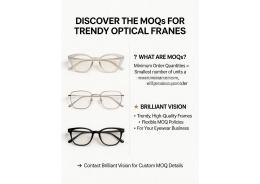
- Minimum order quantities (MOQs): What are the MOQs for eco‑friendly materials compared to regular materials? This is crucial for smaller brands.
A manufacturer that welcomes this level of detail, offers suggestions, and helps you balance sustainability, design, and cost is far more likely to be a strong long‑term partner.
5. Evaluate Production Capabilities and Quality Control
Responsible production is about more than just raw materials. To ensure your sustainable eyewear line is durable, comfortable, and compliant, review the manufacturer’s capabilities across the full production chain. A factory such as Brilliant Vision typically covers:
- Design & Engineering: The ability to optimize frame thickness, hinge design, and lens fit to work well with eco‑friendly materials.
- Prototyping & Sampling: Quick sampling cycles so you can test fit, finish, and durability before committing to mass production.
- Precision Molding & Cutting: Especially important for acetate and injection materials, where waste reduction and consistent quality are part of sustainable practice.
- Polishing & Surface Treatment: Processes that deliver high‑end aesthetics without unnecessary environmental impact.
- Assembly & Quality Inspection: Multi‑step QC to guarantee frame alignment, hinge function, and overall product safety.
Robust quality control reduces returns, over‑production, and waste—which directly supports your sustainability goals.
6. Look for Long‑Term, Relationship‑Driven Factories
Brands that are serious about sustainability usually build long‑term relationships with their manufacturing partners. When evaluating a potential factory, check whether they emphasize:
- Long‑term cooperation with overseas brands: This shows they understand international service levels, regulations, and design standards.
- Project management and communication: Dedicated account managers or project managers who can guide you from initial idea through to shipment.
- Continuous improvement: Openness to new eco‑materials, process upgrades, and design innovations.
Brilliant Vision, for instance, positions itself as a solutions provider rather than just a production site—supporting clients across product development, branding, and market positioning. This kind of partnership mindset is especially valuable if you are building a sustainable brand from the ground up.
7. How Brilliant Vision Fits Into a Sustainable Eyewear Strategy
While each brand has unique design language and market positioning, certain manufacturer traits are universally helpful when launching eco‑friendly collections. Reflecting on the capabilities presented by Brilliant Vision, here are ways a partner like this can fit into your sustainable eyewear strategy:
- Concept‑to‑launch support: Ideation, 3D design, and sampling support allow you to experiment with eco materials before committing to large orders.
- Tailored production plans: They can help you select frame structures and components that are technically compatible with sustainable materials.
- Brand and packaging alignment: Coordinating frame design with branded, eco‑friendly packaging gives your collection a coherent sustainable story.
- Scalable production: Start with smaller runs to test the market, then scale up once you validate demand—without changing suppliers.
If you contact a factory like Brilliant Vision with clear sustainability requirements—preferred materials, target markets, expected price range—they can translate those needs into concrete technical solutions and production plans.
8. Practical Steps to Get Started
To turn your sustainable eyewear concept into reality, follow these steps:
- Define your sustainability priorities: Decide whether material choice, packaging, certifications, or manufacturing location is your main driver.
- Research and shortlist manufacturers: Use industry events, directories, and targeted searches to find specialized eyewear factories, then review their websites in depth.
- Reach out with a clear brief: Share your brand story, market segment, design direction, and sustainability expectations. Attach references or sketches if possible.
- Request material and process options: Ask specifically about recycled or bio‑based materials, eco packaging, and minimum order quantities.
- Sample, test, and refine: Order prototypes, test them with your team or target customers, and refine the design before moving to full production.
- Build a long‑term partnership: Work with the same manufacturer to expand your eco‑friendly range, improve designs, and gradually increase sustainability across your portfolio.
Conclusion
Finding sustainable eyewear manufacturers using eco‑friendly materials is a strategic process. Focus on specialized optical factories with proven experience, transparent processes, and a willingness to support your environmental goals. By studying manufacturers like Brilliant Vision, you can better understand what a capable, responsible partner looks like—and lay the foundation for eyewear collections that are not only stylish and durable, but also aligned with the values of modern consumers.

 English
 German
 French
 Russian
 Spanish
 Japanese
 Korean
 Portuguese
 Ukrainian
 Arabic
 Italian